
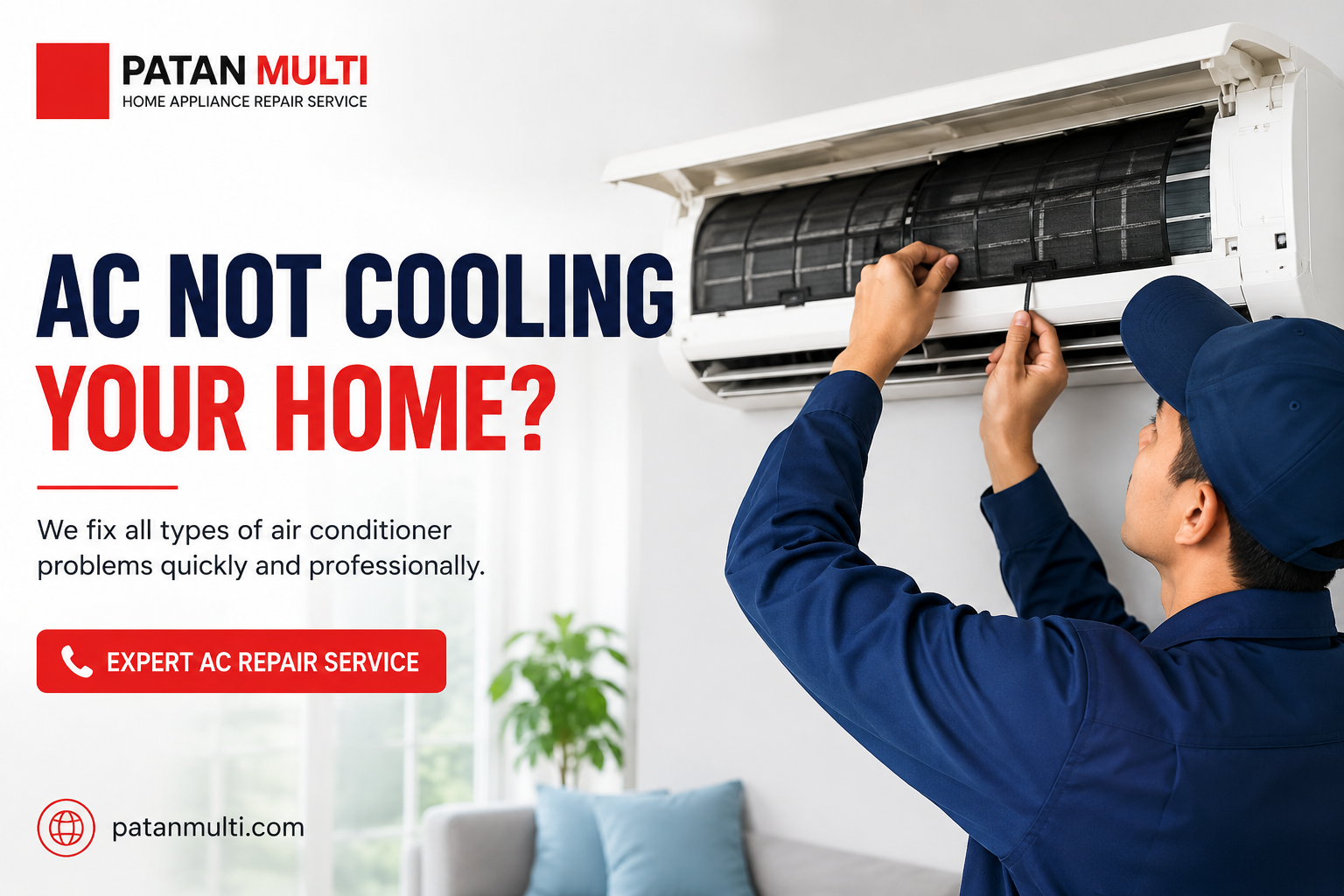
During Nepal’s hot summer months, a properly working air conditioner is essential for comfort at home or in the office. If your AC is running but blowing warm air, it can quickly become frustrating. Fortunately, some cooling problems are easy to identify and fix, while others require professional attention.
This guide explains the most common reasons an air conditioner stops cooling, simple troubleshooting steps you can try safely, and when it’s time to contact an experienced AC repair technician.
Why Is My Air Conditioner Running but Not Cooling?
An air conditioner may continue running while failing to cool because one or more components are not working efficiently. The most common causes include:
- Dirty air filters
- Clogged outdoor condenser unit
- Low refrigerant (gas leakage)
- Incorrect thermostat settings
- Frozen evaporator coil
- Dirty evaporator or condenser coils
- Faulty compressor
- Electrical or capacitor problems
- Blocked air vents
- Poor AC maintenance
Fortunately, many of these problems can be prevented with regular servicing.
1. Check the Thermostat Settings
Before assuming there’s a major fault, inspect the thermostat.
Make sure:
- Cooling mode is selected
- Temperature is set lower than the current room temperature
- Fan mode is set to “Auto”
- Batteries (if applicable) are working properly
Sometimes incorrect settings are the only reason your AC isn’t cooling.
2. Clean or Replace the Air Filter
A dirty air filter restricts airflow, reducing cooling performance and forcing the system to work harder.
Signs of a dirty filter
- Weak airflow
- Dust around vents
- AC runs continuously
- Higher electricity bills
- Poor cooling
What to do
- Turn off the AC.
- Remove the filter.
- Wash reusable filters with clean water.
- Allow them to dry completely.
- Replace disposable filters if damaged.
Experts recommend cleaning filters every 2–4 weeks, especially during Nepal’s dusty season.
3. Inspect the Outdoor Condenser Unit
The outdoor unit releases heat collected from inside your home.
If it’s covered with:
- Dust
- Leaves
- Plastic bags
- Mud
- Grass
heat cannot escape efficiently.
How to clean it
- Switch off the power.
- Remove loose debris.
- Gently rinse the condenser fins with water.
- Avoid using high-pressure water that may bend the fins.
Leave enough open space around the outdoor unit for proper airflow.
4. Check for Frozen Evaporator Coils
Ice on the indoor coil prevents proper cooling.
Common causes
- Dirty filters
- Blocked airflow
- Low refrigerant
- Faulty blower fan
Solution
- Turn off cooling mode.
- Run the fan only for 30–60 minutes.
- Let the ice melt completely.
- Restart the AC.
If freezing happens again, professional inspection is recommended.
5. Look for Refrigerant (Gas) Leaks
Low refrigerant is one of the most common reasons an air conditioner stops cooling.
Warning signs
- Warm air from vents
- Ice forming on pipes
- Hissing sounds
- Long cooling cycles
- Increased electricity bills
Never attempt to refill refrigerant yourself. A certified technician should locate the leak, repair it, pressure-test the system, and recharge it with the correct refrigerant.
6. Check Whether the Outdoor Fan Is Running
The condenser fan removes heat from the refrigerant.
If it stops working:
- Cooling decreases
- Compressor temperature rises
- System efficiency drops
A faulty motor, capacitor, or electrical issue usually requires professional repair.
7. Inspect Air Vents
Furniture, curtains, or dust can block cool air from circulating.
Ensure:
- All supply vents remain open.
- Furniture isn’t blocking airflow.
- Dust is cleaned regularly.
- Return air vents are unobstructed.
Good airflow helps cool every room evenly.
8. Examine the Circuit Breaker
Sometimes only the indoor unit is running while the outdoor unit has lost power.
Check your electrical panel for a tripped breaker.
If it trips repeatedly, avoid resetting it multiple times. Contact an electrician or AC technician to identify the underlying fault.
9. Clean the Indoor Evaporator Coil
Over time, dirt accumulates on the evaporator coil, reducing heat transfer.
Professional cleaning improves:
- Cooling performance
- Air quality
- Energy efficiency
- System lifespan
Annual servicing is the safest way to keep coils clean.
10. Schedule Regular AC Maintenance
Preventive maintenance is the best way to avoid unexpected cooling problems.
A professional service typically includes:
- Filter cleaning
- Coil cleaning
- Refrigerant pressure check
- Electrical inspection
- Drain line cleaning
- Fan inspection
- Performance testing
Regular maintenance helps reduce breakdowns and extends the life of your air conditioner.
When Should You Call an AC Repair Expert?
Contact a professional technician if:
- Your AC blows warm air after basic troubleshooting.
- Refrigerant appears to be leaking.
- Ice keeps forming on the unit.
- The compressor won’t start.
- The outdoor unit isn’t operating.
- Strange noises or burning smells develop.
- Water leaks continue after cleaning.
Ignoring these signs can lead to more expensive repairs later.
AC Maintenance Tips for Nepal
Nepal’s climate presents unique challenges, including dust, seasonal humidity, and voltage fluctuations. To keep your air conditioner operating efficiently:
- Clean filters every 2–4 weeks.
- Service your AC at least once a year, ideally before summer.
- Keep the outdoor unit free of dust and debris.
- Use a voltage stabilizer in areas with unstable power.
- Close doors and windows while the AC is running.
- Set the thermostat between 24°C and 26°C for a balance of comfort and energy efficiency.
Benefits of Professional AC Repair
Hiring experienced technicians offers several advantages:
- Accurate diagnosis of cooling problems
- Safe refrigerant handling
- Improved cooling performance
- Lower electricity consumption
- Longer equipment lifespan
- Reduced risk of recurring faults
- Warranty-friendly repairs
Professional servicing also helps identify minor issues before they become major repairs.
Frequently Asked Questions
Why is my AC running but not cooling?
Common causes include dirty filters, low refrigerant, blocked coils, thermostat issues, or compressor faults.
How often should I service my AC in Nepal?
At least once a year. If your AC runs frequently or you’re in a dusty area, servicing every six months is even better.
Can I recharge AC gas myself?
No. Refrigerant should only be handled by trained technicians using proper equipment.
Does a dirty filter reduce cooling?
Yes. Restricted airflow lowers cooling efficiency and increases electricity consumption.
How long should an air conditioner last?
With proper maintenance, most residential air conditioners can operate effectively for 10–15 years.
Final Thoughts
A home air conditioner that isn’t cooling can result from something as simple as a clogged filter or as serious as a refrigerant leak or compressor failure. While homeowners can safely perform basic checks and routine cleaning, more complex problems should always be handled by qualified technicians.
If your AC still isn’t cooling after these troubleshooting steps, don’t wait for the problem to worsen. Scheduling professional air conditioner repair and maintenance can restore comfort, improve energy efficiency, and help prevent costly breakdowns.
Whether you need a seasonal tune-up, emergency repair, or a complete system inspection, choosing a trusted AC repair service in Nepal ensures your cooling system performs reliably when you need it most.