
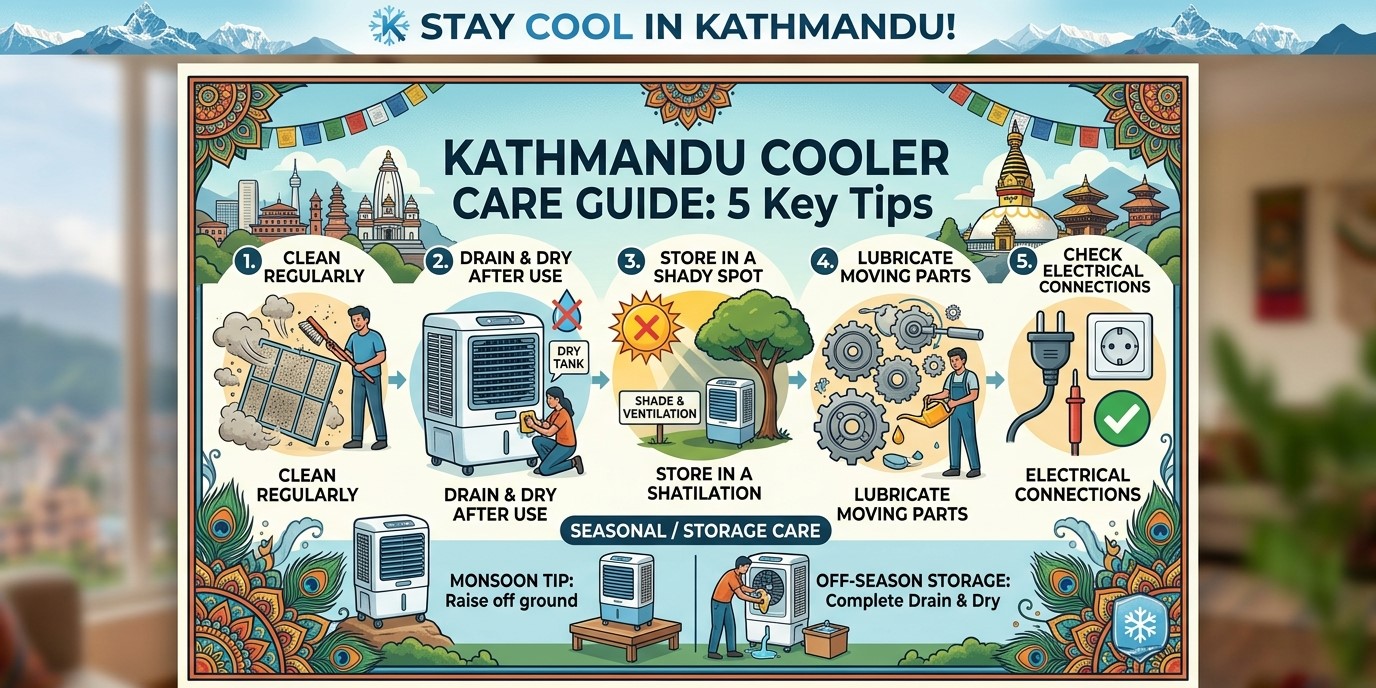
Introduction: The Kathmandu Cooler Reality
Let me tell you something I’ve seen hundreds of times in my workshop in Lalitpur, Pulchowk. A customer brings in a cooler that’s barely 18 months old, completely clogged with dust and algae, the honeycomb pads hardened like cardboard. They ask me, “Sir, why did it stop working so soon?”
The answer is almost always the same: lack of proper maintenance.
Kathmandu’s unique environment – the dust from construction, the mineral content in our water, and the humidity fluctuations – makes cooler care absolutely essential. I’ve serviced coolers across the Valley, from busy Thamel hotels to quiet homes in Bhaktapur, and I can tell you: a well-maintained cooler lasts 5-7 years, while a neglected one struggles after just 2 seasons.
Here’s my practical, experience-backed guide to keeping your evaporative cooler running like new.
Why Cooler Maintenance Matters in Nepal
Your evaporative air cooler works by drawing warm air through water-soaked honeycomb cooling pads. The water absorbs heat, naturally cooling the air . But here’s the problem:
- Kathmandu’s water contains minerals that create scale buildup on pads and pumps
- Dust and pollution clog filters, reducing airflow
- Stagnant water becomes a breeding ground for bacteria and mold
- Power fluctuations damage motors and control boards
Regular maintenance isn’t optional – it’s what separates a cooler that lasts from one that ends up in my repair shop prematurely.
10 Expert Tips for Cooler Care in Kathmandu
1. The Weekly Water Tank Drain – Non-Negotiable
What I recommend: Empty the water tank completely at least once a week .
Why: Stagnant water is the #1 cause of foul odors in coolers. When water sits for days, bacteria multiply and create that musty smell you’ll recognize immediately.
My technique:
- Unplug the unit before touching the tank
- Pull out the tank and empty all remaining water
- Wipe the interior with a soft cloth and warm water
- For stubborn residue, use a 50-50 water and white vinegar solution
2. Clean the Honeycomb Cooling Pads Properly
The honeycomb pads are the heart of your cooler’s cooling ability. When they get clogged with dust or hardened by mineral deposits, cooling efficiency drops dramatically.
Weekly cleaning:
- Remove the pads from the unit
- Rinse thoroughly with clean water
- For deeper cleaning, soak in a 50-50 vinegar-water solution for 30 minutes
- Rinse again and let them dry completely before reinstalling
I know some people use soap – but be careful. Harsh chemicals or scrubbing powder can damage the pads . I recommend vinegar as it’s natural, effective, and safe.
Annual replacement: Replace the honeycomb pads with new ones at least once a year. Even with regular cleaning, they degrade over time .
3. Check and Clean the Dust Filter
Most coolers have a dust filter that traps larger particles before they reach the cooling pads. When this filter gets clogged, airflow decreases, and your cooler struggles.
My advice: Clean the filter weekly during peak usage months .
How to do it:
- Remove the filter (check your manual for location)
- Vacuum the dust using a brush attachment
- For heavy dirt, wash with water and let dry completely
- Never use the cooler without the filter installed
4. Clean the Water Pump Regularly
The water pump circulates water over the honeycomb pads. I’ve seen countless pumps fail simply because they got clogged with debris.
What to watch for:
- Unusual noises from the pump
- Weak water flow over the pads
- The pump running but no water circulating
My tip: Inspect the pump inlet for blockages every month. If you hear irregular sounds during operation, unplug immediately and check for obstructions .
5. Position Your Cooler Correctly
This is something I emphasize to every customer. Proper placement makes a huge difference.
Golden rules:
- Place the cooler in front of an open door or window
- Ensure adequate cross-ventilation in the room – leave a door or window open on the opposite side
- Never cover the air inlet or outlet – this damages the motor
- Place on a level surface to prevent vibration and noise
One more thing: Avoid placing the cooler directly in the path of dust from open windows. Position it where air flow is cleanest.
6. Never Add Chemicals to the Water Tank
I’ve seen people add bleach, floor cleaners, and even perfume to their cooler water. Please don’t do this.
These chemicals can:
- Damage the honeycomb pads
- Corrode the pump and internal components
- Release harmful fumes into your room
The only thing that should go in your cooler’s water tank is clean tap water . For enhanced cooling, you can add ice packs or ice cubes , but never chemicals.
7. Use Ice Packs Wisely
For those extra hot Kathmandu days, ice packs are a great hack.
My technique:
- Freeze the included ice packs (or small water bottles) overnight
- Place them in the water tank before turning on the cooler
- This drops the water temperature and significantly improves cooling
Warning: Don’t overfill the tank when adding ice. Always check the water level indicator and keep it between MIN and MAX marks.
8. Proper Seasonal Storage
Many Nepali families use coolers only during summer. How you store it during winter months matters enormously.
Before storing for winter:
- Empty the water tank completely
- Clean and dry all components thoroughly – pads, filter, tank
- Let everything air-dry completely to prevent mold growth
- Store in a cool, dry, dust-free place
- Cover the unit to prevent dust accumulation
I cannot stress this enough: Leaving water in the tank during storage is a recipe for disaster. Mold, rust, and pump damage are almost guaranteed.
9. Use the Right Water Quality
Kathmandu’s water has varying mineral content depending on your source. Hard water leads to faster scale buildup on pads and pumps.
My recommendation:
- If your area has visibly hard water, consider using filtered water
- Regular vinegar rinses (monthly) help dissolve mineral deposits
- Some customers install an inline water filter – a worthy investment
10. Know When to Call a Professional
Basic maintenance you can do yourself, but there are clear warning signs for professional help.
Call a technician if:
- The cooler doesn’t turn on or cool properly
- The water pump shows recurring faults
- You notice water leaks or excessive lime buildup
- You hear grinding noises or the motor overheats
- The control panel isn’t responding
My advice: Don’t ignore strange noises or small issues. They usually indicate bigger problems developing.
Common Mistakes I See Repeatedly
| Mistake | Consequence |
|---|---|
| Not cleaning the filter frequently | Reduced efficiency, poor air quality |
| Leaving stagnant water in the tank | Bacteria growth, bad odors |
| Ignoring unusual sounds | Leads to complete motor or pump failure |
| Using harsh cleaning chemicals | Damages pads and plastic components |
| Running the cooler without water | Destroys the pump immediately |
Quick Maintenance Schedule
| Task | Frequency |
|---|---|
| Drain and clean water tank | Weekly |
| Clean dust filter | Weekly |
| Rinse honeycomb pads | Weekly |
| Deep clean with vinegar solution | Monthly |
| Inspect water pump | Monthly |
| Replace honeycomb pads | Annually |
| Professional servicing | Every 2 years |
Why Maintenance Saves You Money
Let me give you a real example. A new cooler costs NPR 15,000-35,000 depending on size and brand. A basic service visit costs around NPR 1,500-2,500. A complete pump replacement might cost NPR 3,000-5,000.
Neglect your cooler: You’ll be buying a new one in 2-3 years.
Maintain your cooler: It will serve you well for 5-7 years, sometimes longer.
I’ve seen customers with 8-year-old coolers that still work perfectly – because they followed a simple maintenance routine.
Brands and Models Commonly Serviced in Kathmandu
In my workshop, I regularly service coolers from:
- CG (COOLKIN, SNOWCOOL series)
- Midea
- DeLonghi
- Honeywell
- Various other local and imported brands
Each brand has its own specific maintenance requirements. Always check your instruction manual – it contains model-specific recommendations .
Final Word from Your Technician
Look, I’m not trying to scare you. Coolers are simple, robust machines. With just 15-20 minutes of care each week, you can avoid 90% of the problems I see in my repair shop.
My top 3 takeaways:
- Drain the tank weekly – prevents odor and bacteria
- Clean the pads regularly – maintains cooling efficiency
- Use vinegar for cleaning – safe, effective, and cheap
Your cooler works hard during Kathmandu’s hot months. Return the favor with a little care, and it will keep you comfortable for years.
Need Professional Help?
Have questions about your specific cooler model? Drop me a comment below – I’m happy to help!
Disclaimer: This guide is based on my professional experience servicing coolers in Nepal. Always consult your specific model’s instruction manual for manufacturer-recommended maintenance procedures.